
Maintaining a Ceramic Coating | Ceramic Coating in Raleigh, NC
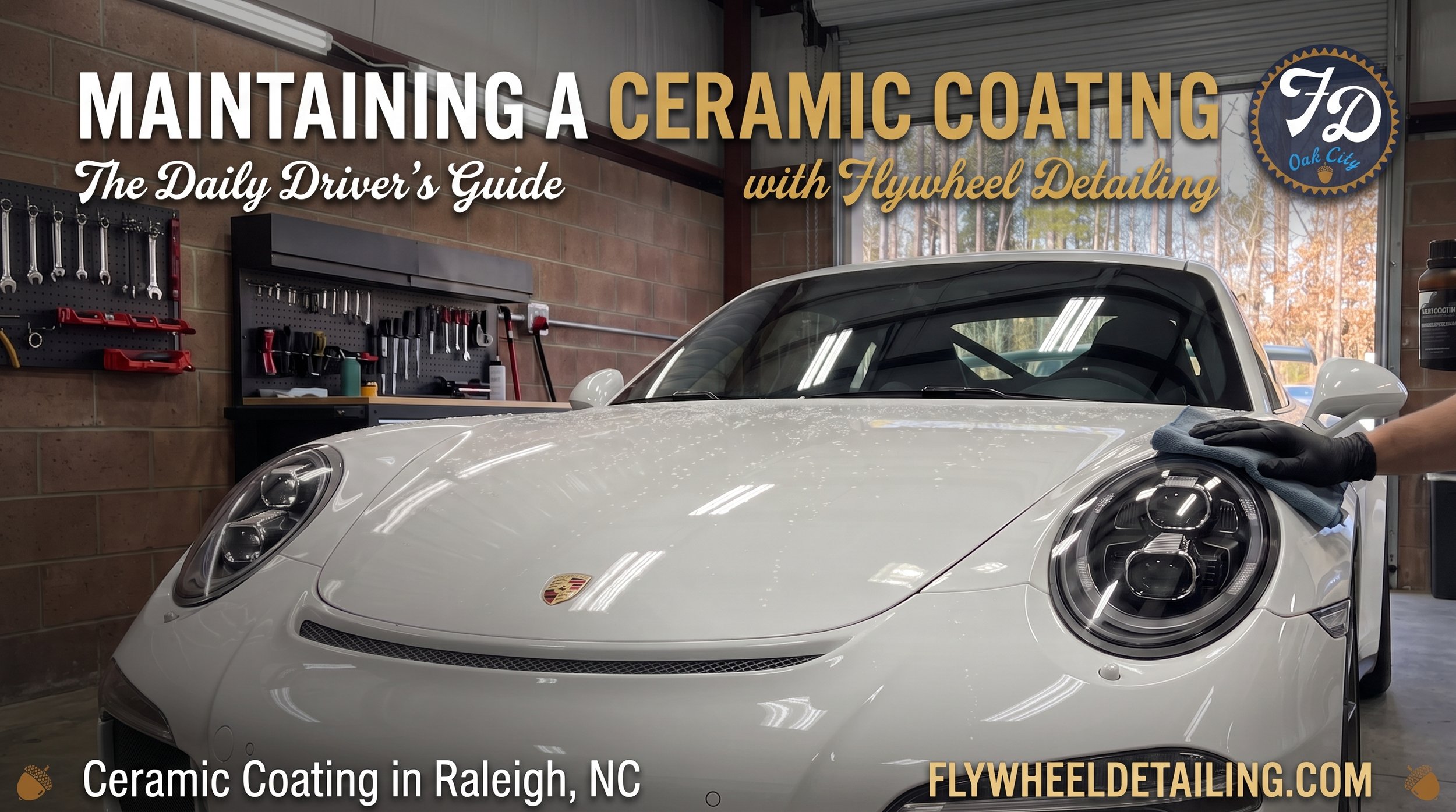
Ceramic Coated Porsche 911 GT3, how to maintain the ceramic coating
TL;DR — The Daily Driver’s Cheat Sheet
The Goal: Turn an average 2–3-year coating life into 5+ years of hyper-hydrophobic protection on a daily driver.
Washing (Quarterly at least): Ditch automatic car washes, touchless or not. Use the two-bucket method, or a light pressure washer, with a pure pH-neutral car shampoo and soft microfiber wash mitts.
Drying: Never let the sun do the drying. Raleigh’s hard water will leave stubborn mineral spots. Use a small leaf blower or an SiO2 ceramic detailer as a drying aid with a plush microfiber towel.
Decontamination (Every 6 Months): Spray an iron fallout remover to unclog embedded brake dust without aggressive scrubbing.
Immediate Care: Clean bird droppings, tree sap, and bug guts instantly and apply a quick detailer before the harsh North Carolina sun bakes and etches into the coating.
Congrats! You made the decision to get your vehicle professionally ceramic coated. The hard work is done, and now it’s all about protecting your investment so it pays off for as long as possible.
If you’ve spent any time reading about ceramic coatings online, you’ve probably seen wild durability claims: 8, 9, or even 10 years! The truth? Most daily drivers get 2 to 3 years of peak protection out of a professional-grade coating. Those decade-long numbers aren't impossible, but they are usually reserved for garage-kept queens that only come out on sunny Sunday strolls.
This guide isn't for Sunday cruisers; it is for daily drivers. It’s for the cars that brave the highway commute, park outside, and face real-world weather. With a practical maintenance routine, you can reach 4, 5, or 6+ years of coverage.
Here is a straightforward guide to keeping your ceramic coating performing like new.
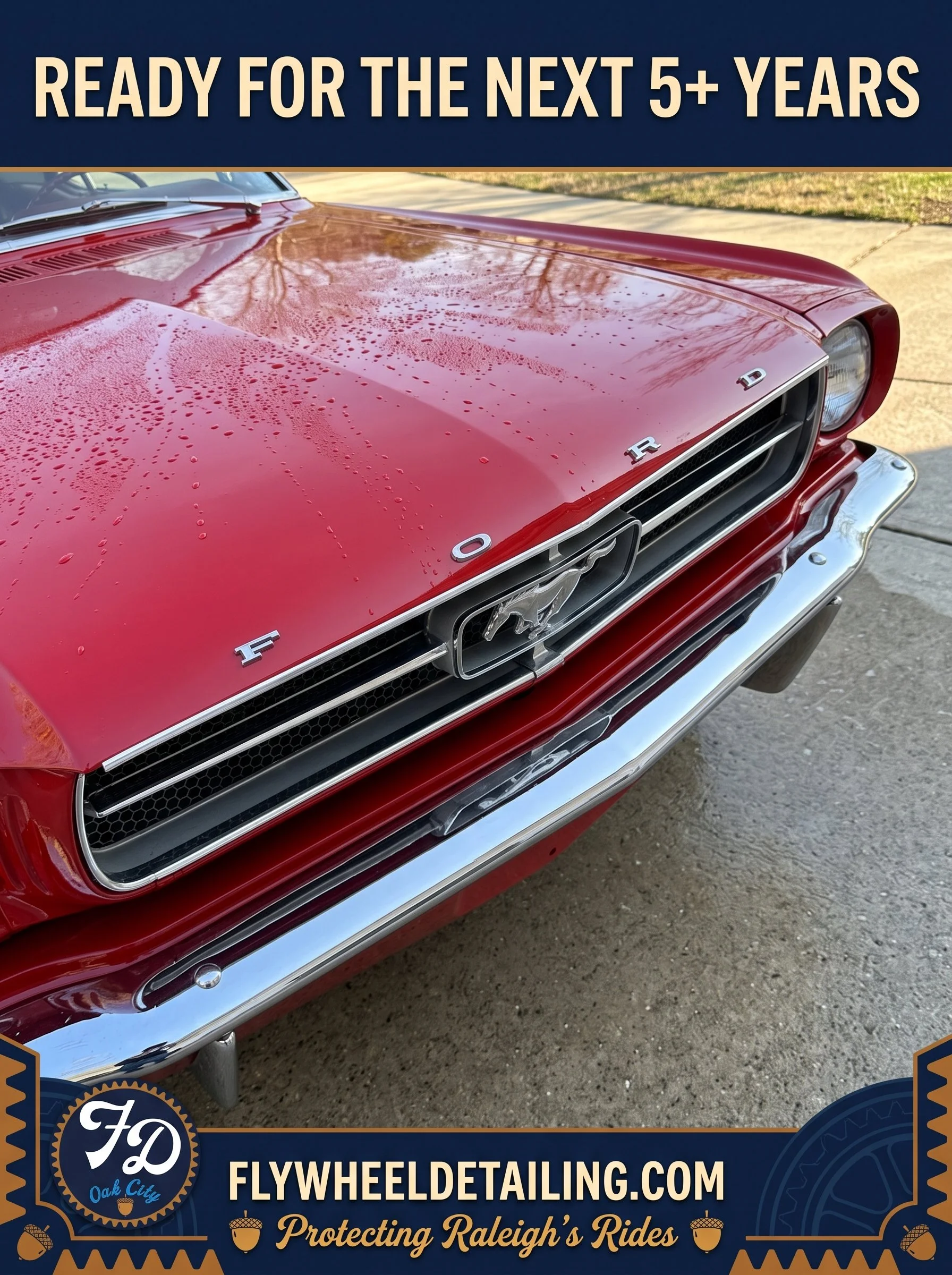
The Golden Rule: Frequent, Safe Cleaning
The golden rule of ceramic coatings is simple: the better you care for it, the longer it will care for you.
A ceramic coating creates a smooth, glass-like hydrophobic layer over your paint, but it isn't indestructible. Two primary things destroy coatings prematurely:
Physical Abrasion: Micro-scratches and swirl marks from unsafe washing techniques.
Chemical Contamination: Embedded brake dust, industrial fallout, tree sap, and bug acids that mask or eat away at the finish.
Keeping organic contaminants from sitting on the surface for extended periods is 90% of the battle. Here in North Carolina, especially in Raleigh, everything falls from our trees at some point during the year. Being prepared to remove those contaminants is important in maintaining the coatings’ performance.
Essential Starter Tools
You don't need a professional setup to keep your car in top shape, but a few key items make the job much easier:
Electric Pressure Washer: An inexpensive pressure washer saves massive amounts of time and handles about 80% of routine wash work.
Foam Cannon or Two Buckets: A foam cannon is a fun extra, but a basic two-bucket setup with dirt guards works amazingly well.
pH-Neutral Soap & Quality Wash Mitt: Gentle cleaning power without harsh additives.
SiO2 Ceramic Spray Topper: Acts as a lightweight sacrificial shield and a slick drying aid.
A Reliable Drying Method: A small leaf blower or a plush microfiber drying towel.
1. Safe Washing Techniques (Quarterly at Minimum)
For a daily driver, wash your vehicle at least once a quarter (or more frequently depending on your driving conditions).
Ditch the Drive-Through Washes: Avoid mechanical brush washes entirely—they drag grit across your paint and create severe swirl marks. Even "touchless" car washes use aggressive, high-pH chemical cleaners that break down your coating's outer barrier over time.
Master the Two-Bucket Method, or get a foam cannon: Fill one 5-gallon bucket with soapy water and another with clean water. Dip your mitt into the soap, wash a panel, and rinse it in the clean water bucket before taking more soap. This prevents trapped dirt from grinding back into the paint.
Use Dedicated pH-Neutral Soap: Stick to pure pH-neutral car soaps. Avoid "wash-and-wax" formulas, gloss-enhancing shampoos, or household soaps like dish detergent. These leave synthetic films behind that clog the coating, making it look like the protection has failed.
Blow Dry or Use a Drying Aid: Here in Raleigh and across the Triangle, tap water carries minerals that will form stubborn hard water spots if allowed to dry in the sun; the sun is essentially baking those minerals into your coating. Use a small electric leaf blower to blow water out of the cracks, or mist a ceramic topper onto wet panels to act as a slick drying aid while wiping down with a plush microfiber towel.
2. Chemical Decontamination (Every 6 Months)
Over time, daily driving causes microscopic iron particles (from brake dust) and industrial fallout to embed themselves into the coating's pores. When this happens, the paint feels rough, and water stops beading up.
Your coating isn't dead—it's just clogged.
Iron Fallout Removal: Every 6 months, apply a pH-neutral iron fallout remover during your wash routine. The spray turns purple as it chemically dissolves embedded iron without aggressive scrubbing.
Tar and Bug Spotting: Use a dedicated tar and bug remover spray on lower body panels and the front bumper. Let the chemical dwell and do the hard work so you don't have to scrub.
Skip Traditional Clay Bars: Standard clay bars are abrasive and can cause micro-marring on coated paint. If claying is necessary, use a fine-grade synthetic clay mitt or towel with plenty of lubricated soap spray.
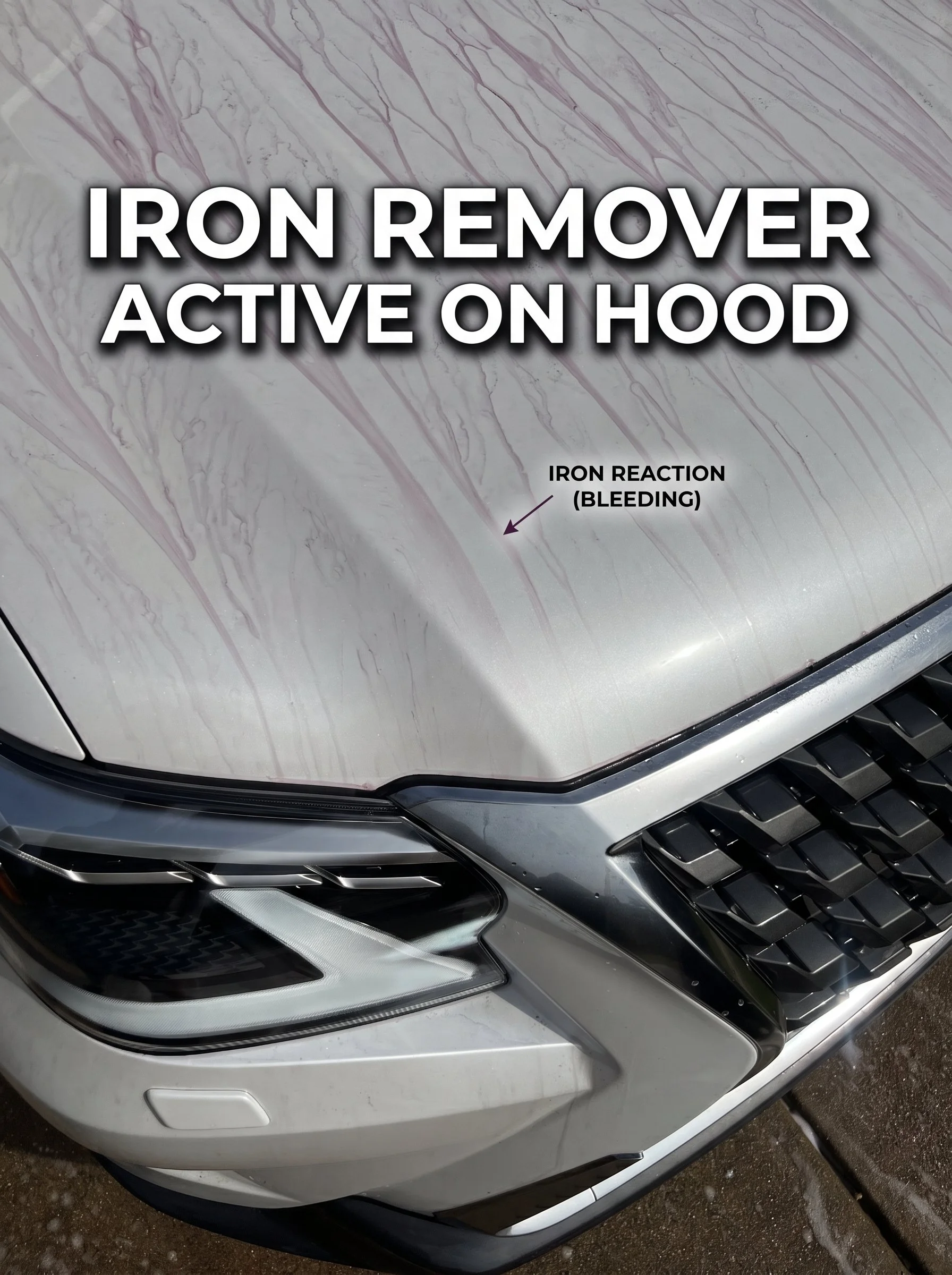
Iron Remover in action
3. Top-Off with SiO2 Sprays (Every 2–3 Months)
Think of your ceramic coating as the main shield over your paint. To help that shield last for years, you can apply a light top layer every few months.
Use Silica / SiO2 Detailers: Spray a high-quality SiO2 ceramic spray onto the panel after washing.
Restore Hydrophobics and Slickness: These ceramic toppers bond directly to the existing coating. They take the brunt of daily UV exposure and road grime while instantly restoring slickness and hyper-hydrophobic water beading.
4. Emergency Spot Cleaning
Organic contaminants are the natural enemy of any clear coat or ceramic surface.
Bird Droppings & Tree Sap: Acidic bird droppings and tree sap can etch into ceramic coatings within hours when baked under direct sunlight. Keep a small bottle of quick detailer and a soft microfiber towel in your glove box for immediate spot removal.
Hard Water Deposits: Never let tap water or lawn sprinklers air-dry on your car. If you get caught by sprinkler overspray, wipe it off right away with a quick detailer before minerals etch into the surface.
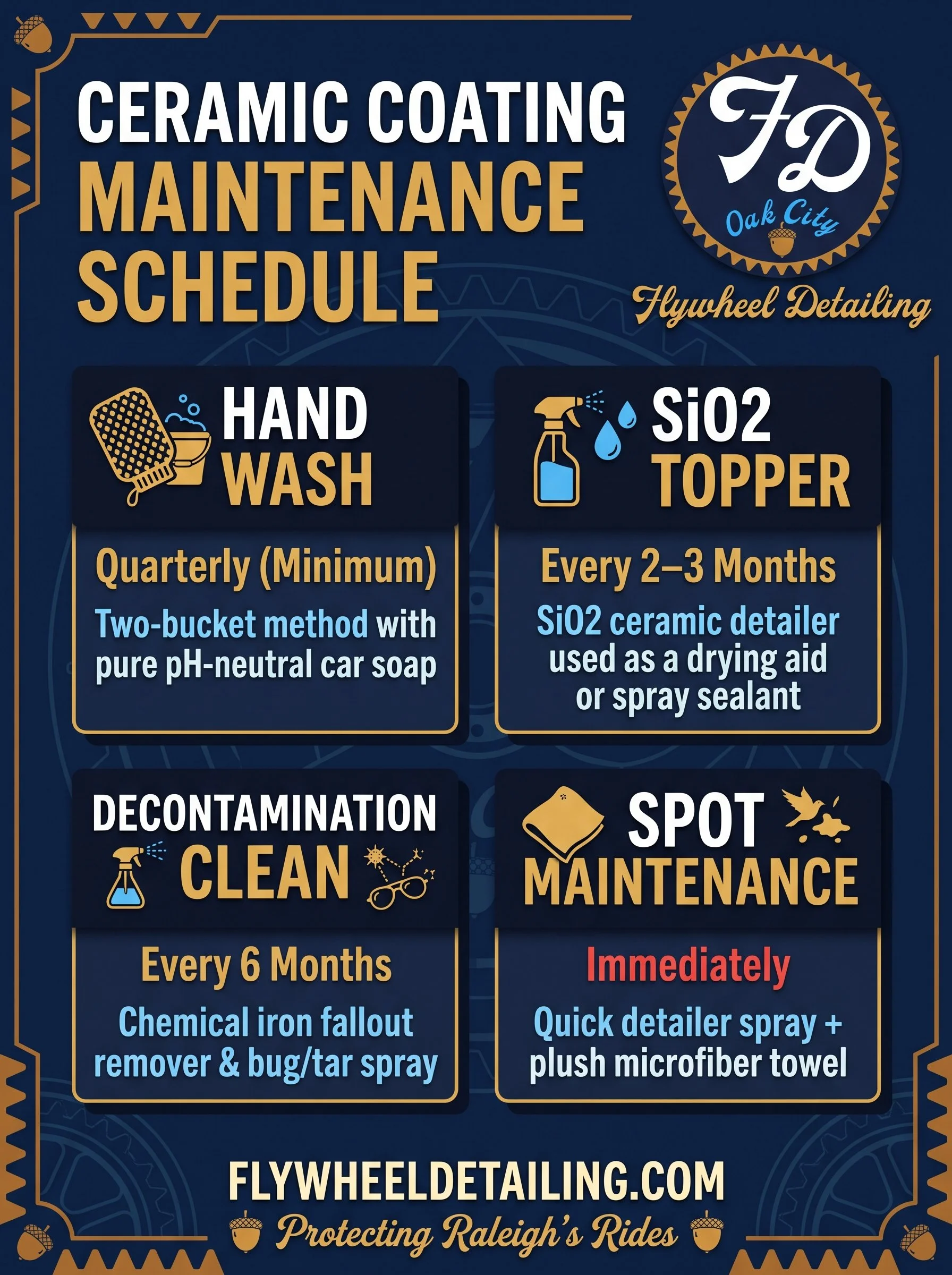
Guide
Immediate Next Steps
Check Your Current Products: Ensure your car wash soap is completely pH-neutral and free of wax or gloss additives.
Assemble an Emergency Glove Box Kit: Stash a 4 oz bottle of quick detailer and two high-GSM microfiber towels in your vehicle for fast bird-dropping cleanup.
Schedule Your Next Decon Wash: Mark your calendar 6 months out from your coating application date for a chemical iron decontamination wash.
As always, if you have questions, feel free to reach out:
