Explore Our Ceramic Coating Services
Durham, NC
& Surrounding areas
For over a decade, Flywheel Detailing has specialized in professional-grade ceramic coatings. Our shop is equipped to deliver unmatched application and curing.
Brands that trust us:


A ceramic coating is a liquid polymer that chemically bonds with your vehicle’s clear coat to form a durable, glass-like shield. Unlike traditional wax that wears off in weeks, a ceramic coating provides years of permanent protection and enhancement.
Permanent Protection: Chemically fuses with the paint surface so it will not wash off or degrade over time.
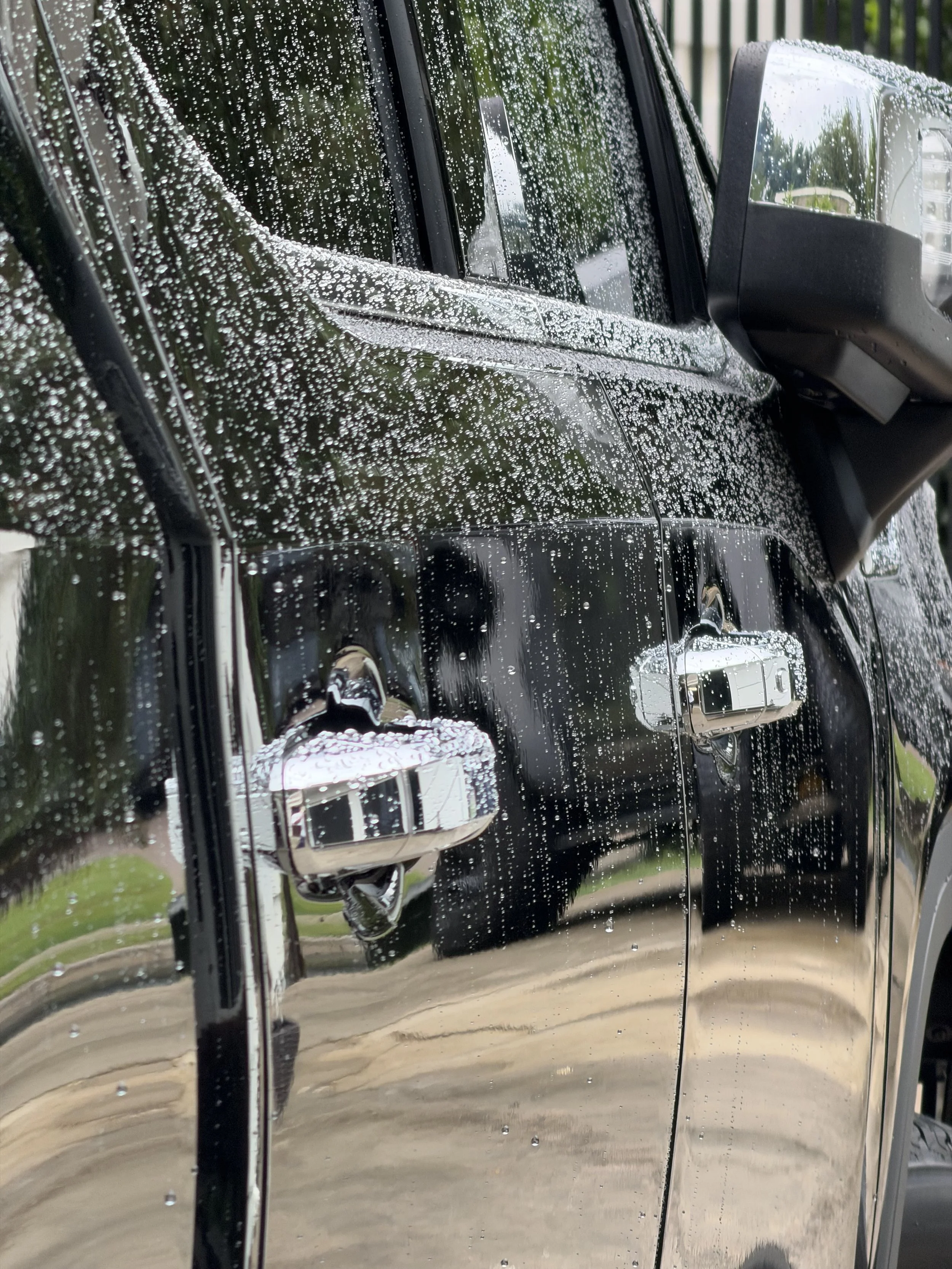
Hydrophobic Shield: Repels water, mud, and road grime, allowing contaminants to slide off effortlessly.
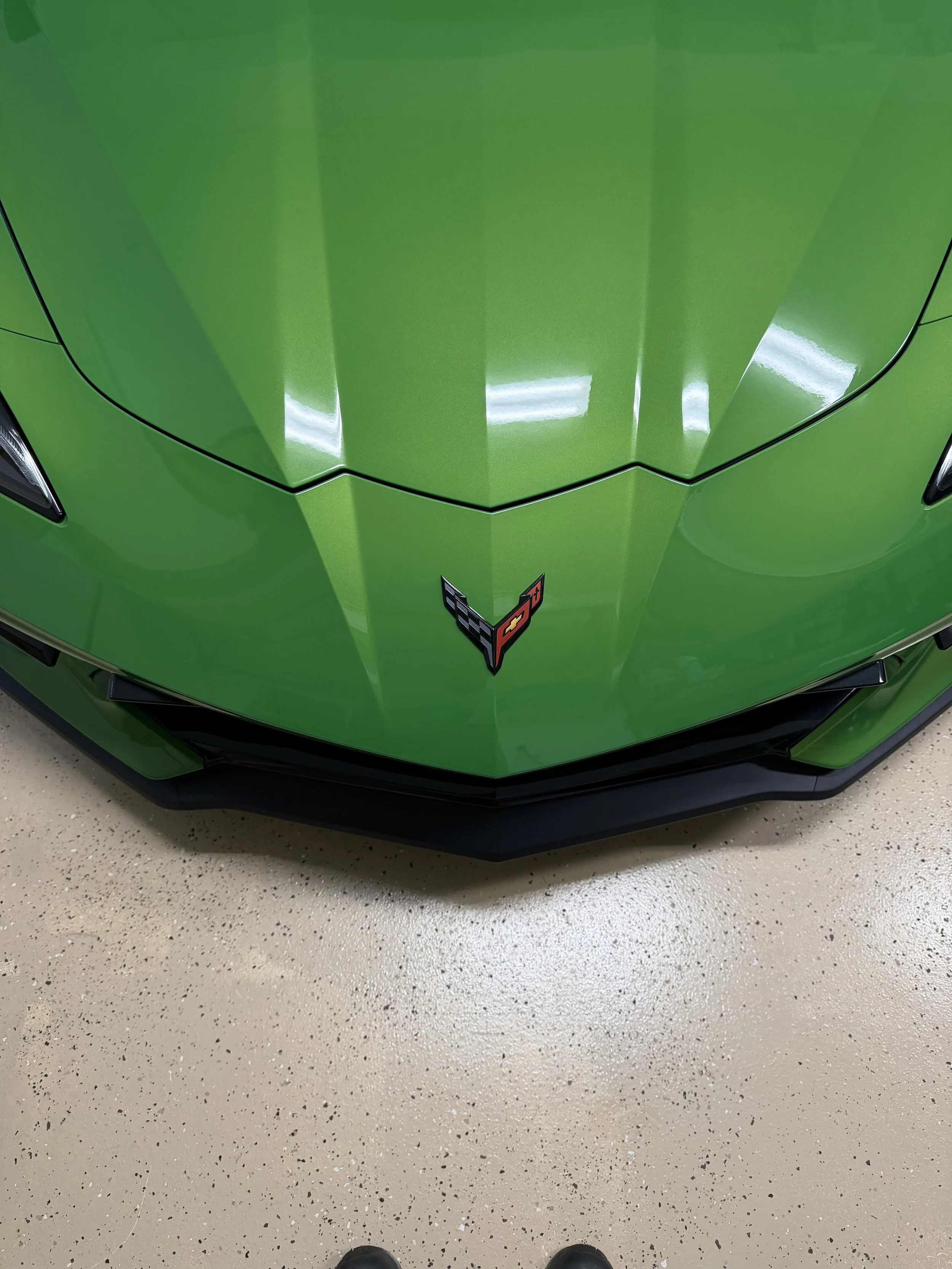
Lasting Mirror Finish: Seals in freshly polished paint to maintain a deep, high-gloss shine for years.
What is a Ceramic Coating
Why should you get a Ceramic Coating?
HYDROPHOBIC EXCELLENCE
Water beads right off, collecting road grime and particulates and wiping them off the car’s surface. Providing a chemical barrier from the elements.
Keeps your car cleaner for longer. .
SMIRROR GLOSS FINISH
Ceramic Coatings enhance the cars glossy finish while locking in its perfect appearance.
STAIN RESISTANCE
Ceramic Coatings are fantastic solutions to prevent staining, marring, and etching on your car’s surface. This will help prevent etching from bird droppping and tree sap.
SWIRL & SCRATCH DEFENSE
Add an extra layer that sits ontop of clear coat to harden exterior and provide protection from minor sctraches and swirl marks.
UV SHIELD
Shields paint from harmful sun fade. Protects from Carolina UV rays that dull bare clear coat.
EASY MAINTENANCE
Cleaning and drying your car has never been easier.
Helps prevent water spotting from harsh city water.
Our Process
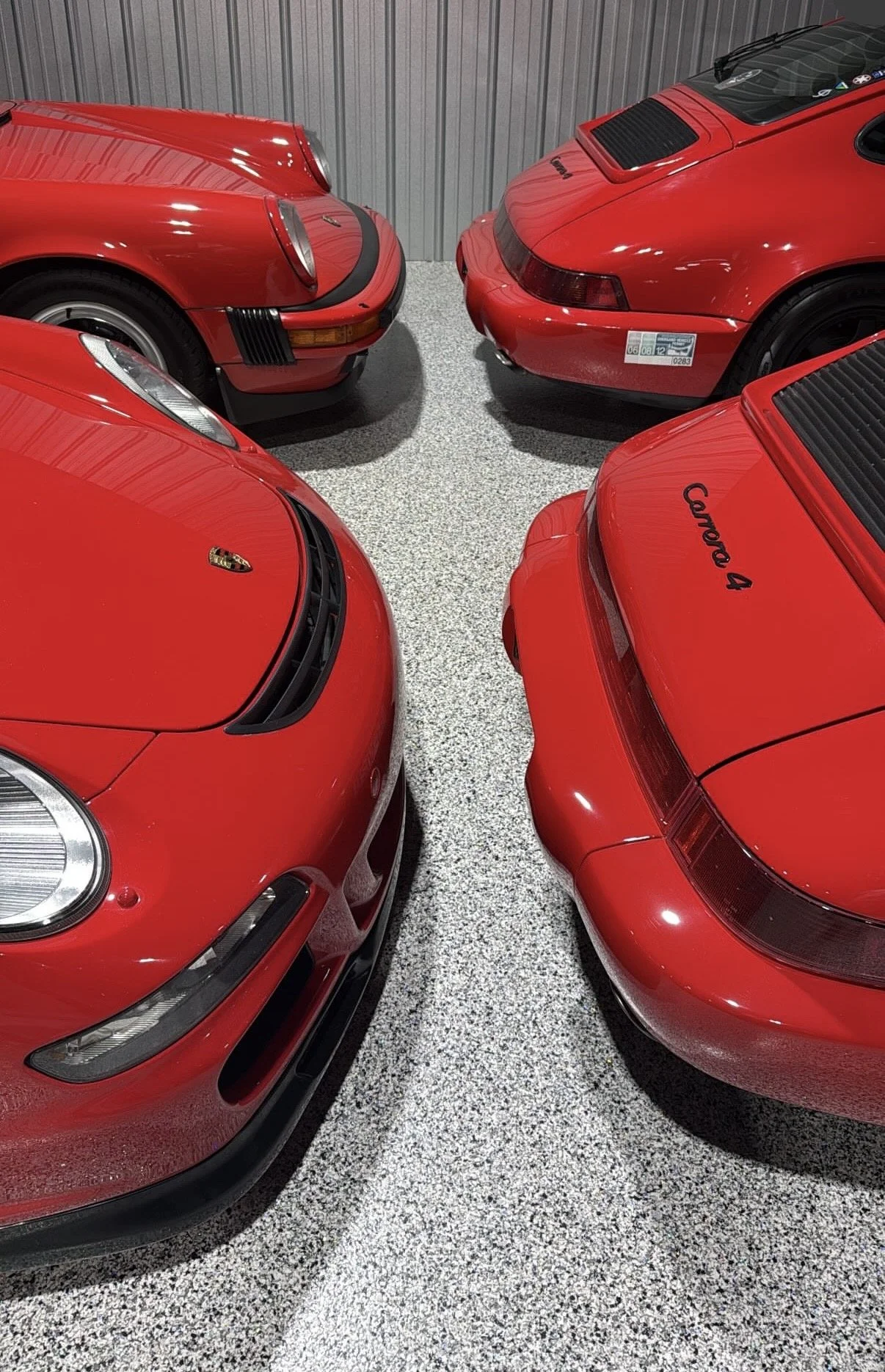
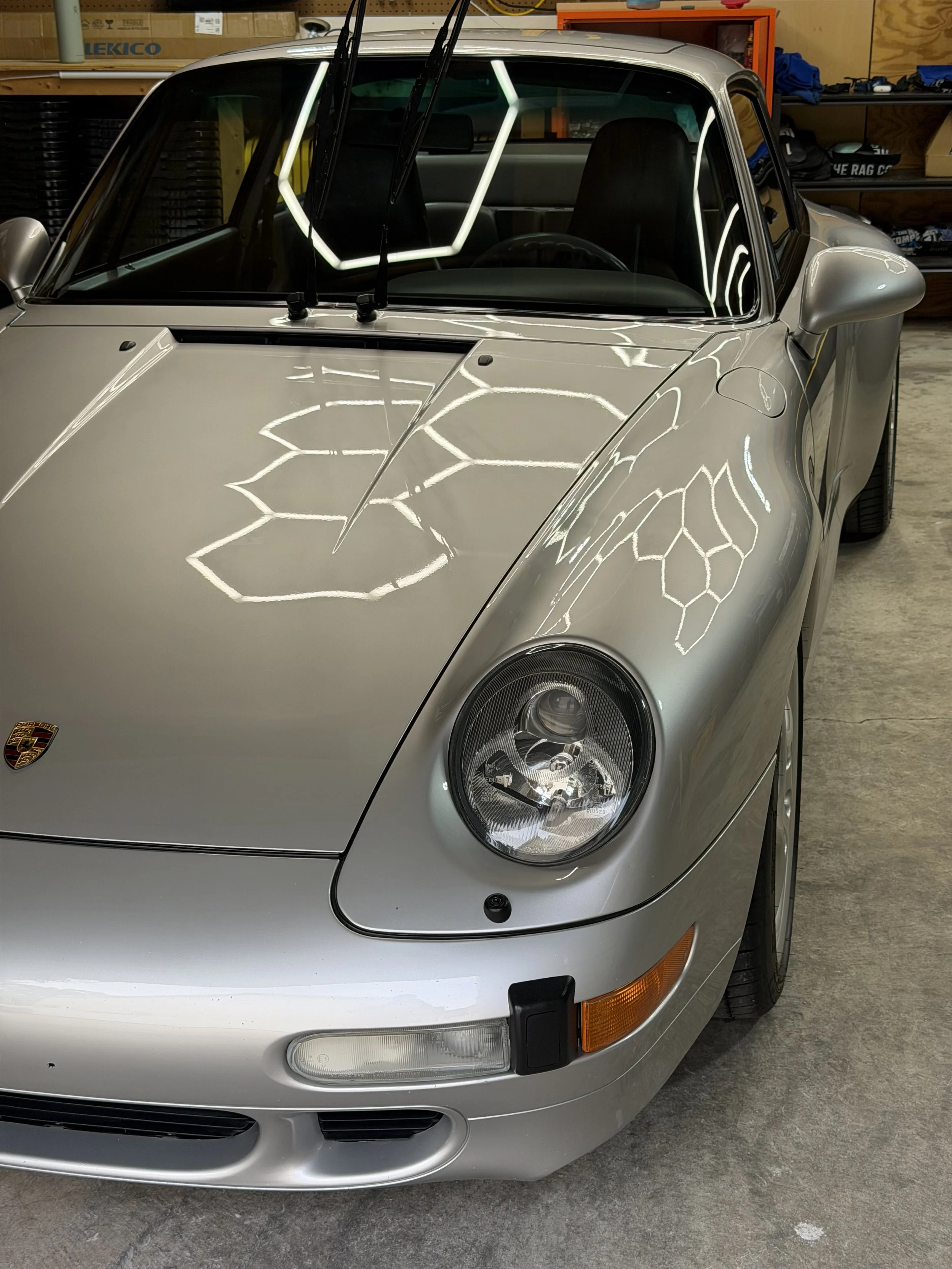
Each of our clients has different needs and bring us various projects. From Vintage Porsche restoration to brand-new cars. Below is an outline of how we ceramic coat cars. Each job is different, but some aspects are the same.
-
Deep Wheel & Barrel Cleaning: Wheels, tires, and wheel wells are scrubbed with iron-deactivating cleaners to remove harsh brake dust and road tar.
Chemical Stripping Wash: The vehicle receives a high-foam prep wash using a high-pH soap to strip away existing wax, sealants, or road grime.
Intricate Crevice Cleaning: Soft boar-hair brushes are used around emblems, grilles, window trim, and badges to clear hidden dirt.
-
Iron Removal (Chemical): A specialized iron-dissolving fallout remover is applied to the paint to melt away embedded metallic particles from industrial fallout and brake dust.
Clay Bar Treatment (If needed): The entire paint surface is lubricated and gently clayed to pull out remaining embedded contaminants, leaving the clear coat glass-smooth.
-
Touchless Air Drying: Heated, filtered, forced air is used to blow water out of panel gaps, badging, and trim to avoid micro-scratching or water dripping during polishing. During this stage water spots are removed as best as possible.
Paint Depth Measurement: An electronic paint depth gauge is used across every panel to measure clear coat thickness, ensuring safe and effective correction.
-
This step is dependent on the clinet and their cars current condition.
Heavy Cut / Compound (If Needed): Removes deep swirl marks, scratches, etching, and severe oxidation using precision rotary or dual-action polishers.
Micro-Finishing Polish: Enhances optical clarity, eliminates haze from previous compounding, and brings out deep reflection and gloss.
LED Inspection Inspection: High-intensity inspection lights and color-matched diffusers are used to inspect every angle, ensuring a defect-free surface.
-
Oil Residue Stripping: The entire car is wiped down with an Isopropyl Alcohol (IPA) panel wipe or dedicated coating prep spray. This step strips lingering polishing oils and filler compounds, leaving raw, clean paint so the coating can cross-link directly to the clear coat.
-
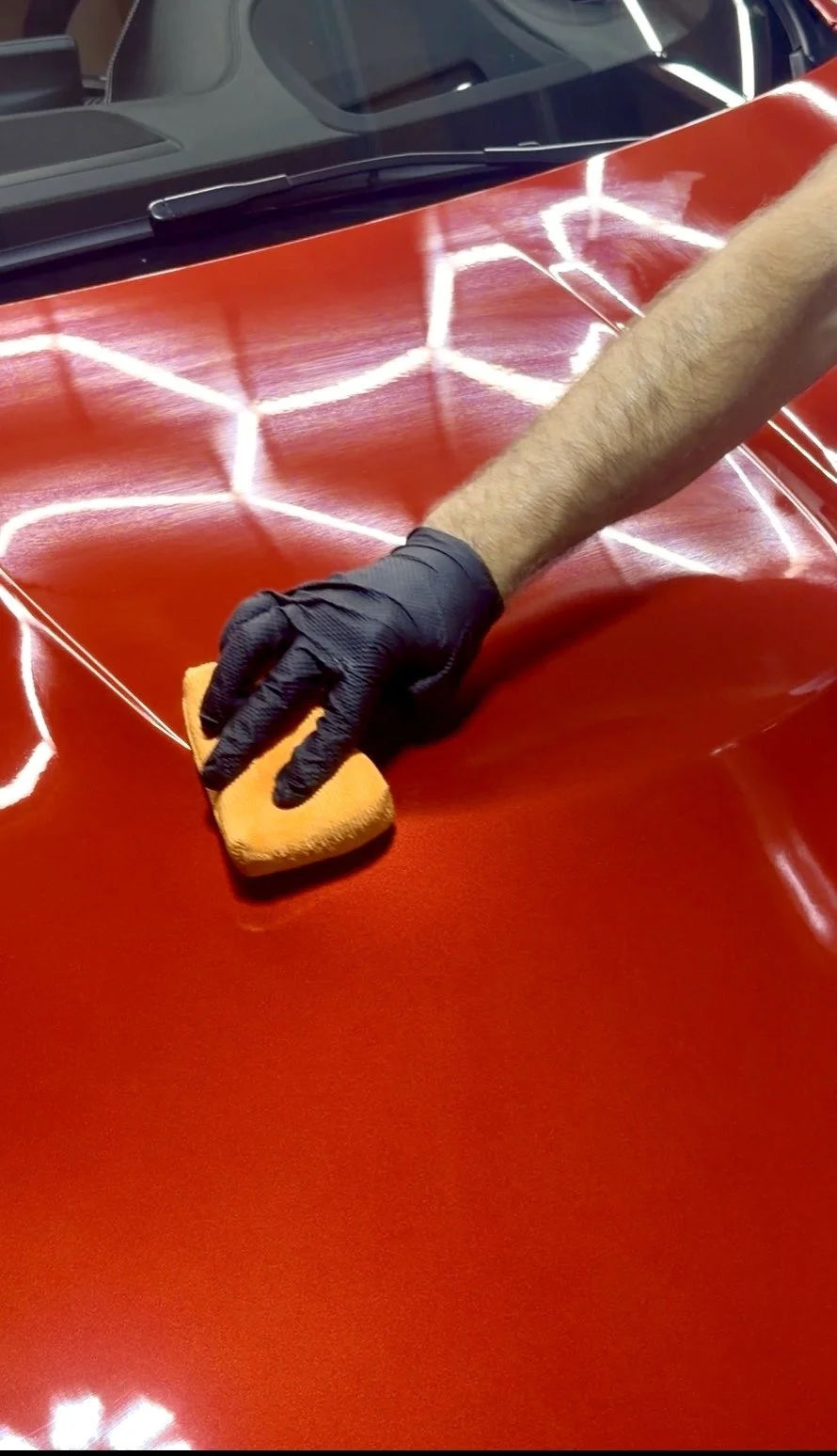
Section-by-Section Application: The professional ceramic coating is applied in small, overlapping grids using a specialized suede-wrapped applicator block.
Flash Monitoring & Leveling: Technicians carefully monitor the coating's "flash time" (when solvents evaporate and the product turns iridescent) before wiping off the excess with ultra-plush microfiber towels.
High-Spot Removal: Paint is double-checked under specialized light angles to prevent "high spots" (dark, uneven patches of uncured coating).
-
Initial Surface Cure: The vehicle remains in a climate-controlled, dust-free bay for 12 to 24 hours to prevent moisture, dust, or humidity from interfering with the curing phase.
Final Walkaround Inspection: A master technician conducts a final inspection under varying light spectrums before handing the keys back to the client.
Featured publications:

Everything poissible on the Extrioer gets Ceramic Coated:
Paint
〰️
Windows
〰️
Trim
〰️
Wheels
〰️
Paint 〰️ Windows 〰️ Trim 〰️ Wheels 〰️
Ceramic Coating FAQ:
-
I apply a professional-grade ceramic coating rated at 9 years of durability. Achieving long-term durability isn't guaranteed and depends on how the vehicle is maintained; professional ceramic coatings typically last anywhere from 2 to 7+ years. Unlike wax, which washes off after a few months, a ceramic coating chemically bonds with your clear coat for long-term durability.
-
Waxing is not necessary, but in some cases is recommended. Please refer to our list of recommended waxes if you choose to apply a wax. Ceramic coatings provide superior gloss, hydrophobicity, and protection compared to traditional wax. Instead, periodic maintenance sprays or ceramic toppers can be used to boost performance and provide opportunities for growth.
-
In most cases, we can get the vehicle fully coated in 3 days, so plan accordingly. It takes one day to prep the vehicle, a day to ceramic coat, and a day to cure and quality-test each panel before the client picks up.
-
In most cases it is reccomended, but in some cases, like a new car it may not be needed. Ceramic coatings seal in whatever condition your paint is currently in. Polishing and correcting the paint first removes existing swirls, oxidation, and scratches so the coating locks in a flawless, high-gloss finish rather than sealing in defects.
-
Yes, but with proper techniques. We recommend waiting at least 7 days before your first wash to allow the coating to fully cure. After that, wash using a pH-neutral shampoo and the two-bucket method or a foam cannon. Avoid automated touch car washes with abrasive brushes, as they can cause swirl marks.
-
No. While ceramic coatings provide excellent defense against light wash swirls, environmental contaminants, and minor chemical etchings, they are not thick enough to stop heavy scratches, key marks, or rock chips. For physical impact protection, Paint Protection Film (PPF) is recommended.
-
Yes. We have a garage space located in North Hills, Raleigh.
What our clients are saying:
More about Ceramic Coatings:
Read our Blog posts.
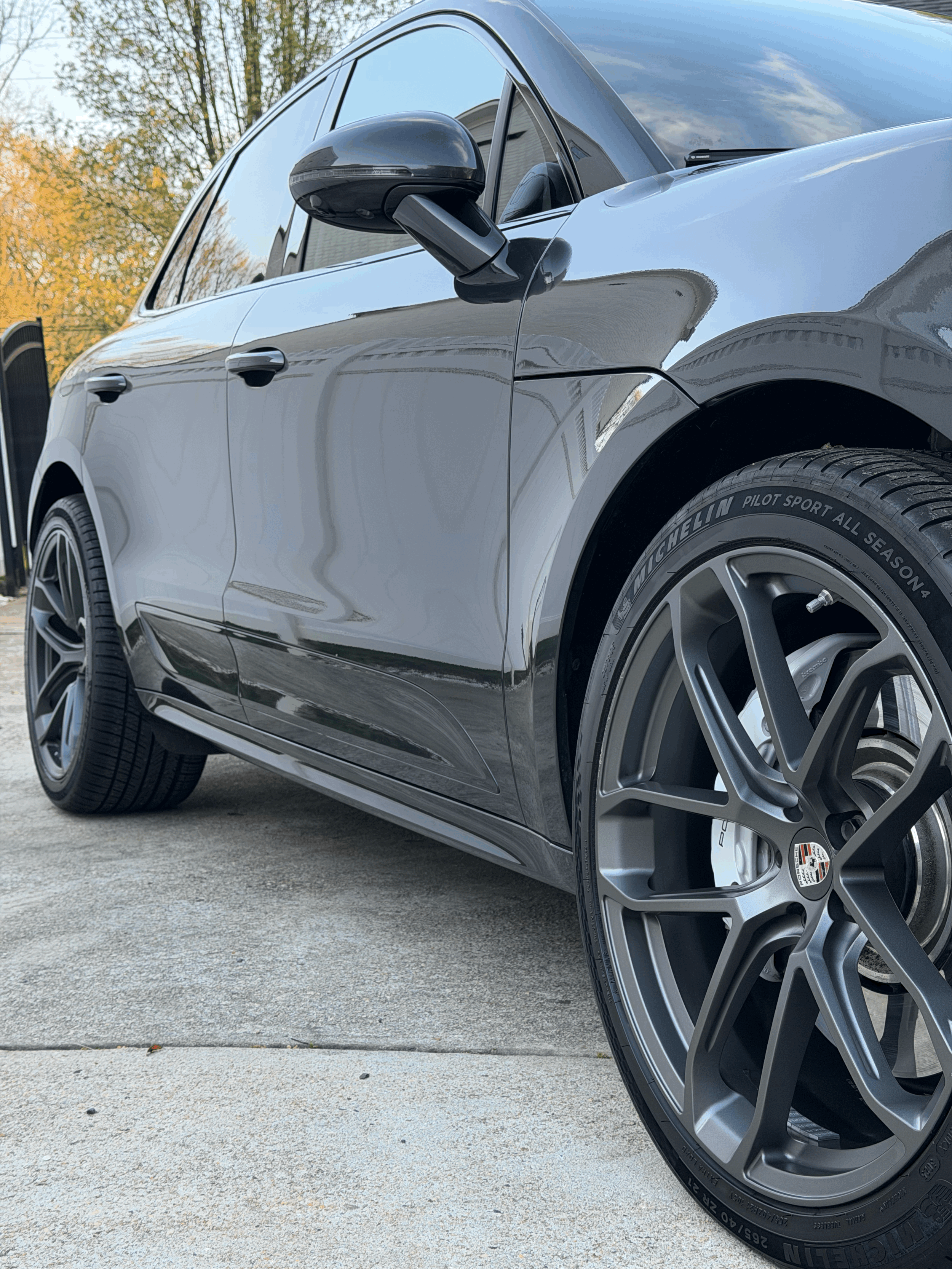
Unlocking the Secrets of Ceramic Coatings: A Comprehensive Guide for 2026
An Indepth guide on Ceramic Coatings
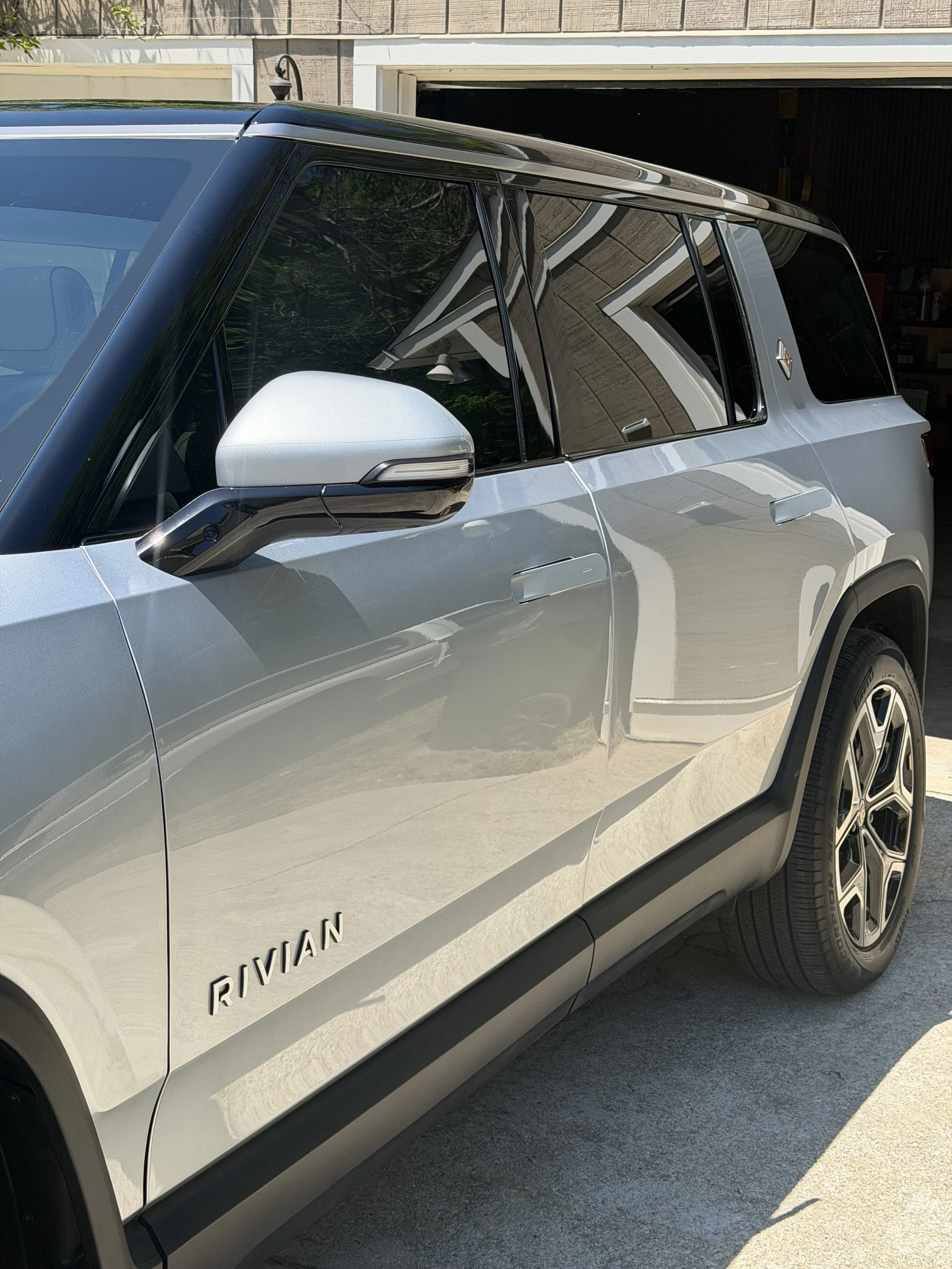
What Are Ceramic Coatings and Are they right for you?
More about Ceramic Coatings
Reach out for a free quote, or questions: